
John Aycock is a professor in the Department of Computer Science at the
University of Calgary, Canada. His research interests include studying
the implementation of “retro” computer games and technology, which he
has been doing in collaboration with archaeologists and others.

Kyle Browness is Director of Digital Collections Operations at Library and Archives Canada (LAC). In this role, Kyle co-manages LAC’s digital preservation program in collaboration with a diverse range of managers and staff with expertise in digital archiving, digital librarianship, digital conservation, technical solution development, and digital preservation. LAC’s digital preservation program is the steward of over 19 petabytes of collection data of national significance to Canadians. In addition to participating in the Canadian Computing Heritage Network (CCHN), LAC program staff are also active members of the Digital Preservation Coalition (DPC), the International Internet Preservation Consortium (IIPC), as well as the Digital Preservation Working Group of the Canadian Association of Research Libraries (CARL).

Scott M. Campbell is the Director of the Centre for Society, Technology and Values at the University of Waterloo, an undergraduate focused humanities teaching unit within the Faculty of Engineering that emphasizes critical thinking about issues relating to technology and society. He is also the co-founder and curator of the University of Waterloo Computer Museum, which collect, preserve and interpret the
history of computing at the University of Waterloo (UW) and related organizations of the geographic region. His research relates to the historical thinking pedagogy, as well as the history of technology and
computing, particularly within Canada and as it relates to academia and women in computer. He holds a B.Math/CS degree from the University of Waterloo (1999), and an M.A. and Ph.D. in the history of technology from the Institute for the History and Philosophy of Science and Technology at the University of Toronto (2006). He is an Associate Professor Teaching Stream, in the Department of Systems Design Engineering.

Hannah Chafe is the Special Collections Librarian at the University of Toronto Mississauga where she supports the processing, preservation, and access of the Syd Bolton Video Game Collection and Personal Computer Museum. These collections encompass over 50 years of computing and gaming history and support the Game Studies minor program at UTM. Hannah received her Master of Information from UofT’s iSchool, where she focused on how to ensure the long-term preservation of multimedia materials. Her current research focuses on the accessibility of multimedia special collections and preservation of legacy computing hardware.
John Durno is Head, Digital Infrastructure at the University of Victoria Libraries, where he coordinates Library IT operations and manages the Libraries’ Historic Computing Lab. His research is in the area of digital preservation, with a specific interest in data recovery from obsolete media. He is the principal researcher in a multi-year project to recover and restore a collection of digital artworks created in the 1980s in the medium of Telidon videotex and currently serves on the CARL Digital Preservation Working Group, and the COPPUL Digital Stewardship Network. He holds MLIS and MFA degrees, both from the University of British Columbia. His CV is available at https://www.durno.ca

Craig Harkema is the Digital Initiatives Librarian and faculty lead of the Digital Research Centre at the University of Saskatchewan. He’s been involved in a wide range of digital cultural heritage projects over the years and currently developing digital scholarship services at the USask Library. His current research focuses on the preservation of digital products from research and artistic works and providing ways to explore and interact with digital culture in its various forms.
Eric Kaltman (PhD Computer Science) is an Associate Professor of Media and Technology Studies and History at the University of Alberta. He directs the Software History Futures and Technologies (SHFT) group, which focuses on the creation of new tools and methodologies for accessing historical software and their dependent digital records. Kaltman is also the Strategic Coordinator of the Software Preservation Network, a non-profit devoted to advocacy for software access. His current research is centered on the use of software emulation (programs that run older programs), specifically, his Game and Interactive Software Scholarship Toolkit (GISST) that allows for citation of running software. His latest publications include An Overview of Emulation as a Preservation Method, a report for the Council on Library and Information Resources (CLIR), Hypercitations of Historical Hypertexts: Two Case Studies in Electronic Literature, published at ACM Hypertext 2025, and The Potential of Cited Executable State for Software Object Access, Validation, and Research, winner of the Best Paper award at the 2024 International Conference on Digital Preservation (iPRES).

Francis Lavigne is the manager of the video games observation and documentation university Lab (LUDOV) in the history of art, cinema and audiovisual medias at the Université de Montréal. He is also completing his doctoral thesis on the history and formal aspects of video game reviews through time, focusing on the Castlevania (Konami, 1986-present) series. He is interested in archival methods, specifically in documentation processes around video game experiences.

Cait McKinney is the author of I Know You Are, but What Am I? On Pee-wee Herman (Minnesota 2024) and Information Activism: A Queer History of Lesbian Media Technologies (Duke 2020), which won the Gertrude Robinson Best Book Prize from the Canadian Communication Association and was a Lambda Literary Award Finalist for LGBTQ studies. They are an associate professor of communication at Simon Fraser University. McKinney’s collaborations with the artist Hazel Meyer explore shared attachments to queer archives through writing, performance, video, and other interventions. Recent activations of their work include the Glasgow International Art Biennial (SCT), VIVO Media Arts Centre (CA), the Art Museum at the University of Toronto (CA), and Tale of Tub (NL). McKinney is the In Focus editor of the Journal for Cinema and Media Studies and co-editor of the Sign, Storage, Transmission series at Duke University Press.

Jeff Nagy is an Assistant Professor in the Department of Communication and Media Studies at York University. His current research focuses on the intersection of AI development and disability from the 1940s to the present. With the DISCO Network, he is a co-author of Technoskepticism: Between Possibility and Refusal (Stanford University Press, 2025). His research and writing have appeared in Parapraxis, n+1, New Media and Society, Technology and Culture, and elsewhere.

Greg Oster is the current Chair of the University of Saskatchewan
Computer Museum‘s Board. Greg was
part of the original group that met in 2001 to form the museum, and has had held various other volunteer roles in the museum over the years.
Greg works as the Technical Team Lead in the Computer Science Department at the University of Saskatchewan. His office contains numerous museum artifacts which catch the eyes of students, causing them to stop and ask questions about the artifacts and about computing history.
Greg lists the Commodore C64 and the Commodore Amiga 3000 as his favorite and “most influential” computers in his life.
David Pantalony is curator of Science and Medicine at Ingenium – Canada’s Museums of Science and Innovation in Ottawa. His work centers on the material culture of science in Canada, with a current focus on building a national inventory of precision makers, collections and artifacts, Precision Instrument Culture in Canada. David was recently co-editor of a book on the history of materials, supply chains and sound technologies, Unsound Supplies (Oxford University Press, 2025). He is adjunct professor in the University of Ottawa’s History Department, as well as Associate Fellow at the University of Kings College, Halifax.
Bernard Perron is Full Professor of Film and Game Studies at Université of Montréal. He has among others coedited The Video Game Theory Reader 1 and 2 (Routledge, 2003 and 2009), The Routledge Companion to Video Game Studies (2014, second edition in 2023), Z for Zombies (Presses de l’Université de Montréal, 2015), Video Games and the Mind. Essays on Cognition, Affect and Emotion (McFarland, 2016) and Fifty Key Video Games (Routledge, 2023). He has edited Horror Video Games: Essays on the Fusion of Fear and Play (McFarland, 2009). He has also written Silent Hill: The Terror Engine (University of Michigan Press, 2012) and The World of Scary Video Games: A Study in Videoludic Horror (Bloomsbury, 2018). His research and writings concentrate on video games, the horror genre, interactive cinema, and on narration, cognition, emotion and the ludic dimension of narrative cinema. His current research project is “1967-2020: Over 50 Years of Video Game History in Quebec” (SSHRC – 2023-2029). More information can be found at his research team website: http://www.ludov.ca/.

Julia Polyck-O’Neill (they/she) is a poet, artist, curator, and an Assistant Professor in the Department of English and Communication and Media Studies at Memorial University in St John’s, Newfoundland. Their research explores historical and contemporary intersectional feminist, digital approaches to interdisciplinary media artists’ archives and intersections between preservation and conservation, computational technologies, and creative praxis. Their scholarly, peer-reviewed publications appear in journals including Amodern, Zeitschrift für Ästhetik und Allgemeine Kunstwissenschaft (The Journal for Aesthetics and General Art History), English Studies in Canada, Canadian Literature, and in anthologies including Variable Conditions: Para-computational Arts in Canada, 1965–1995 (McGill-Queens UP) and Future Horizons: Digital Humanities in Canada (UOttawa Press). Their first poetry collection, Bad Material, is forthcoming from Talonbooks in Spring 2027.
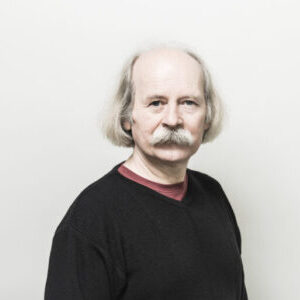
Zbigniew Stachniak is a Senior Scholar in the Department of Electrical Engineering and Computer Science at York University, Canada. His main research areas are artificial intelligence, the history of computing, and the history of mathematics. He has authored several books, as well as scholarly and popular articles, on these subjects. He is the curator of York University Computer Museum.
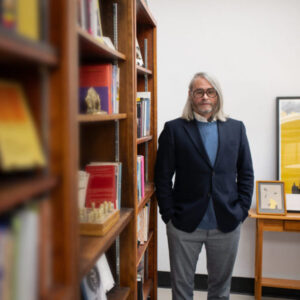
Aaron Tucker is the author of Flexible Faces: The History, Software, and Politics of Facial Recognition (McGill-Queen’s University Press 2026), built in part from his graduate work that won the Governor General’s Gold Medal. He currently serves as a member of the Scientific Committee for the fAIces: Etho-Assemblages and Alternative Futures project (University Institute of Lisbon, Portugal), a project funded by the European Union interrogating how do facial recognition technologies shape our sense of self, citizenship, and public life. He is currently the lead of the SSHRC-funded project “The New Past: A History of Canadian AI as Techno-National Project” which is building a critical history of the development of Canadian AI through a variety of archival sources, with a particular focus on deep learning, natural language processing, and Frontier AI.
Tucker is the author of eight books, including three collections of poetry and two novels, the latest of which is Soldiers, Hunters, Not Cowboys (Coach House Books). He is an Assistant Professor at Memorial University of Newfoundland and Labrador in the English & Communication and Media Studies department.
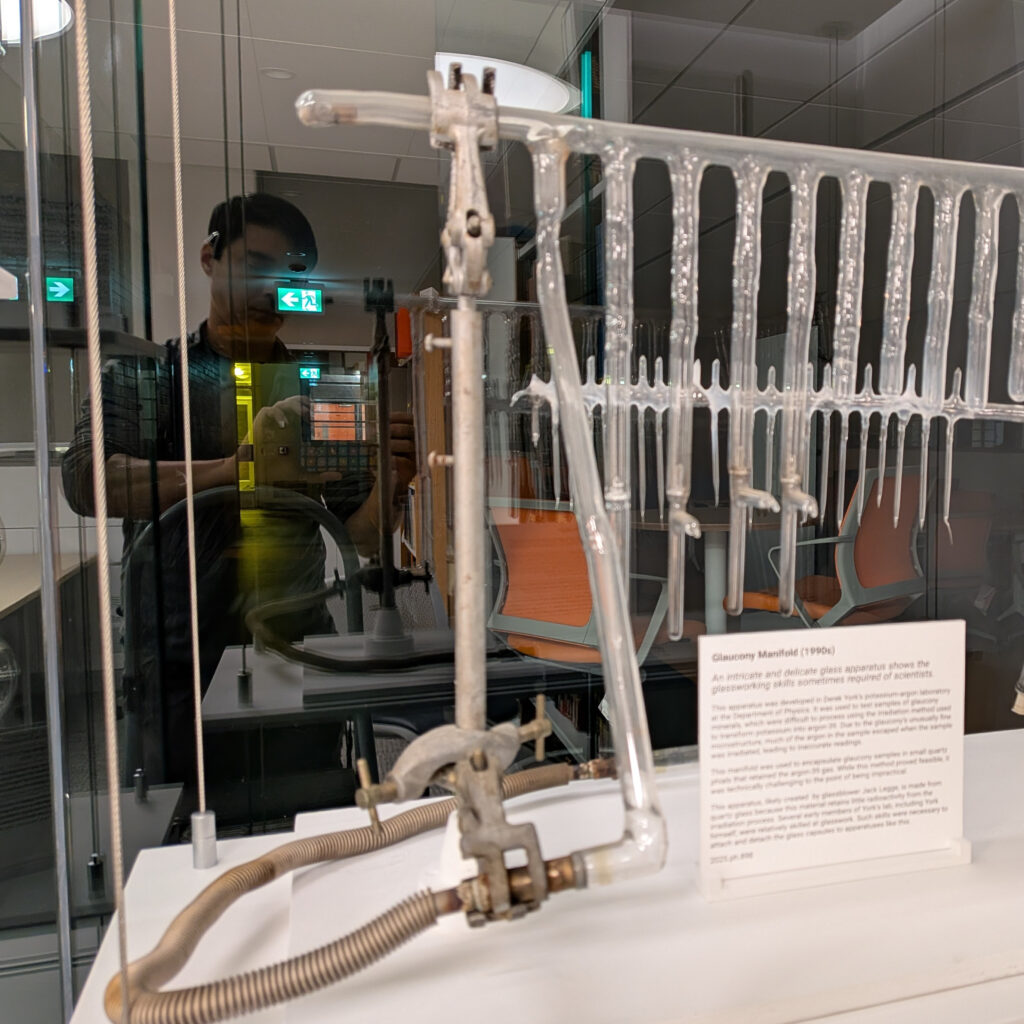
Erich Weidenhammer is a historian specializing in the material culture of science and health. Since 2009 he has worked to collect, catalogue, and safeguard historical artifacts at the University of Toronto and affiliated hospitals. This project covers a range of historical periods and disciplines beginning with the foundation of scientific and technical instruction at the University in the second half nineteenth century. It focuses on artifact entries that are highly contextualized and well documented.
In 2014, Erich graduated with a PhD from the Institute for the History and Philosophy of Science and Technology at the University of Toronto. He is affiliated with the Canada Science and Technology Museum in Ottawa.
In 2026, Erich began a cataloguing project, based at the University of Toronto Department of Computer Science. This notably includes GPUs and servers used in the research surrounding the development of the groundbreaking AlexNet convolutional neural network. This collection documents a landmark in the emergence of deep learning algorithms that presaged the AI boom. The project also explores other themes including the local history of high-performance computing and the evolution of networking infrastructure.
It is hoped that this can form the basis for a broader effort covering computer-related artifacts across other departments and faculties at the University of Toronto.

Chris J. Young (Ph.D.) is the Program Director, Archives and Special Collections at the University of Toronto Mississauga (UTM). He coordinates collection development and management in Archives and Special Collections, which includes curation of the Syd Bolton Collection of video games, the Personal Computer Museum Collection of computer games, and the EP Media Ltd. fonds of game journalism footage. He is a researcher of game production cultures and history with knowledge at the intersection of game studies, bibliography, and digital preservation. His writing has appeared in New Media & Society, Canadian Journal of Communication, and the edited volume Game Production Studies. He has also co-edited special issues for Television & New Media and Media Industries.